
INTRODUCTION:
Many SMEs fall into the trap of waiting for perfection before taking the next step.
We’ve probably heard statements like:
“We’ll launch once everything is perfect.”
We’ll start marketing once our product is perfect.”
“We’ll open a new location once this one is running flawlessly.”
But in reality:
- Perfection is a moving target—by the time you’re ready, the market has already shifted.
- Customers evolve while you’re fine-tuning behind closed doors.
- Competitors get ahead because they acted while you waited.
- Teams lose motivation without real-world wins or feedback.
Another statement: “Let’s just focus on growth; we’ll fix operations later.”
This is the opposite approach—pursuing aggressive growth while ignoring operational issues—is equally problematic.

THE INEVITABLE CONSEQUENCES:
- Customer acquisition costs go up because we’re losing customers as fast as we gain them.
- Complaints increase since we’re not delivering a smooth experience.
- Fewer repeat purchases because customers don’t want to come back.
- Team burnout from trying to keep up without the right systems in place.
- Product quality drops because we’re rushing and cutting corners.
So, growth is important—but it needs to be balanced with strong operations to last.
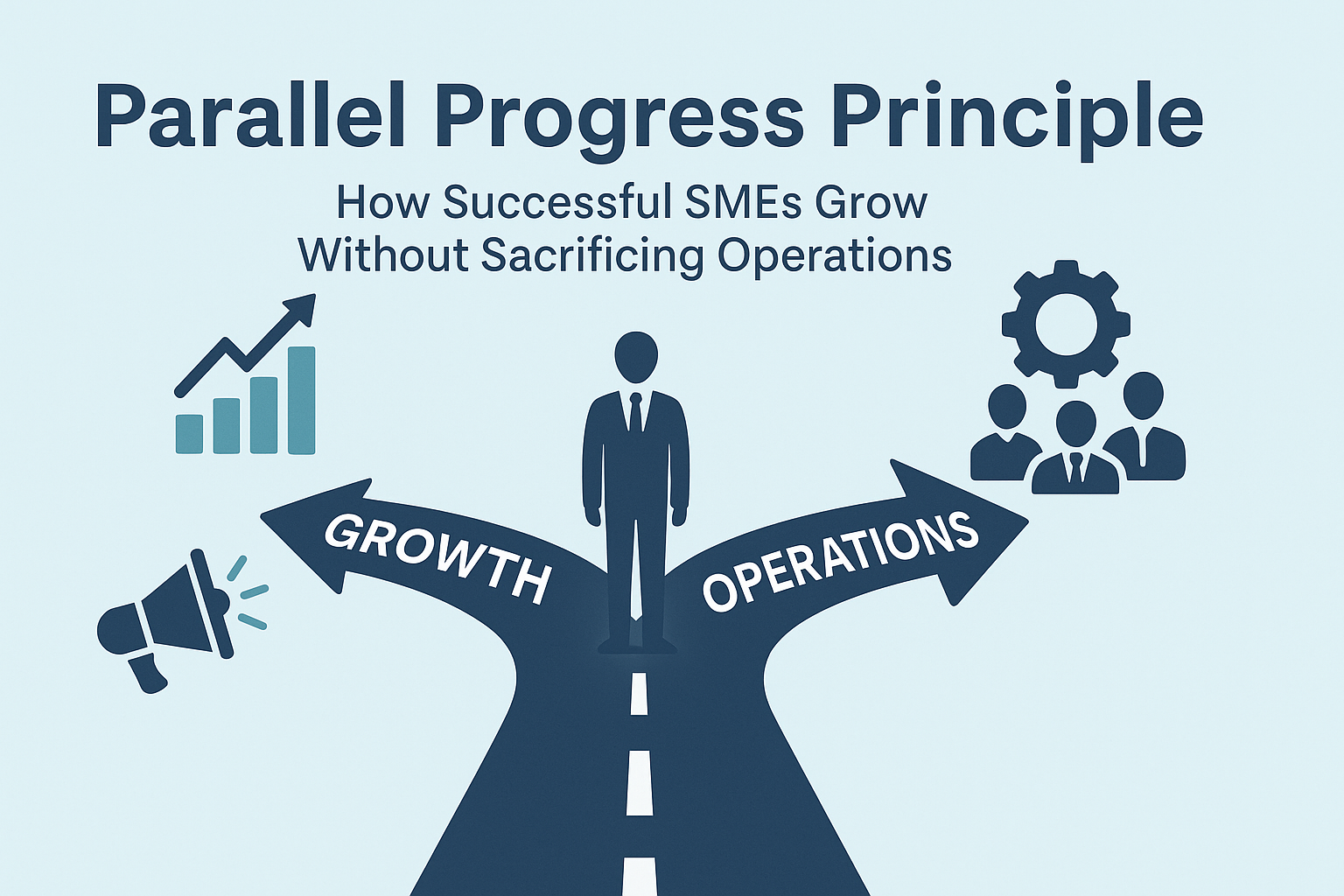
WHAT IS THE PARALLEL PROGRESS PRINCIPLE?
A strategic approach where growth initiatives run in parallel with core operations.
The Parallel Progress Principle means growing the business while keeping operations strong. We don’t choose one over the other—they move forward together. Like
Think of a train: It needs both tracks to run. Assume One is for growth, the other for operations. If either one is weak, the train can’t move forward. we’ll take other Analogy:
Let’s look at a Business-fitness connection to make this clearer:
1.Performing great operations but no new customers are like Exercise without nutrition. You’re fit, but not growing.
2.Doing Lots of excellent marketing, but weak delivery is like Nutrition without exercise. You attract people but can’t keep them.
3.Inconsistent business activities, trying everything without strategy or no clear direction is similar to Random efforts without a plan. You end up busy, but not productive.
So, just like a healthy body needs both exercise and nutrition, a healthy business also needs both strong growth efforts and solid operations, running in parallel.
STRATEGIES FOR IMPLEMENTATION:
1. ESTABLISH YOUR MINIMUM VIABLE OPERATIONS (MVO):
Define the absolute minimum operational standards required to deliver value to customers. This includes:
a. Clear delivery or fulfillment process: It doesn’t need to be perfect, just making sure you have a clear, simple and reliable way to deliver your product or service.
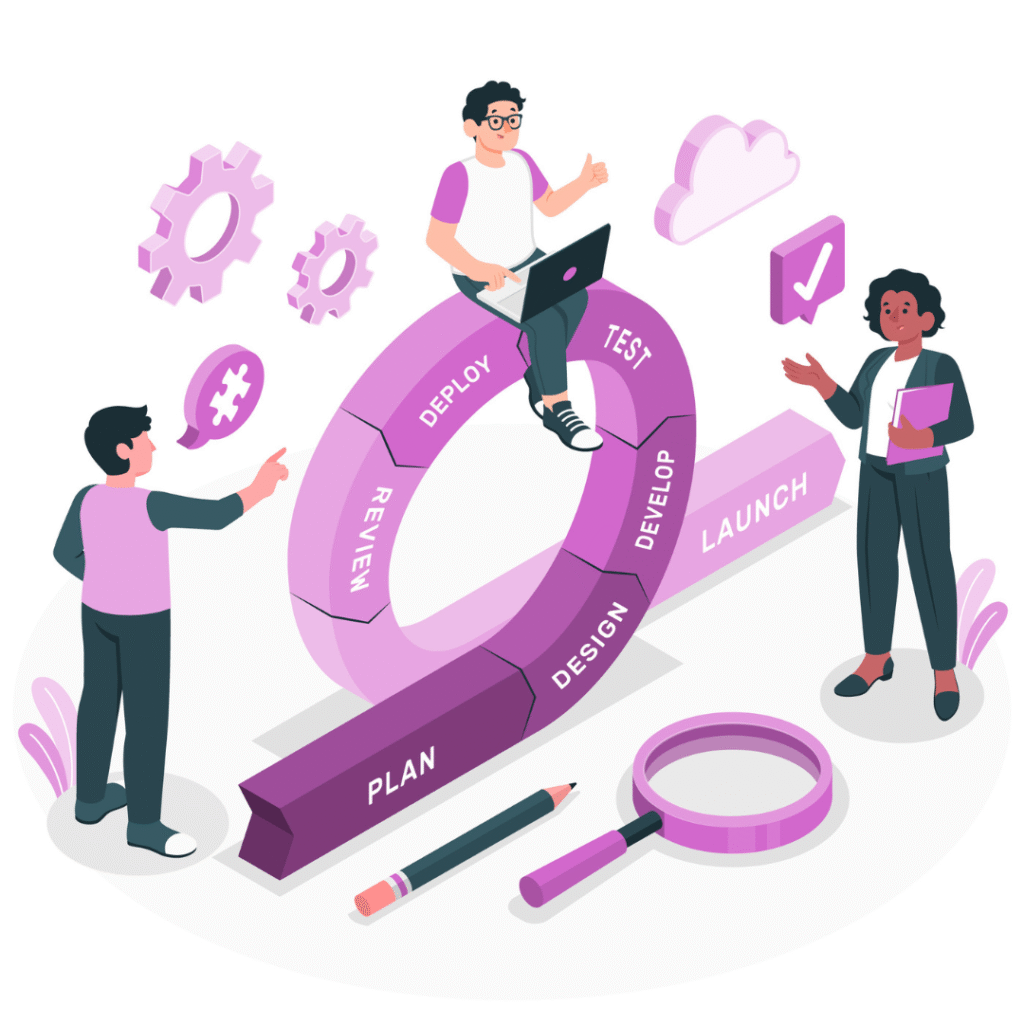
b. Basic customer support setup to handle customer questions or problems—this could be as simple as an email inbox or a ticketing tool.
c. Inventory or service tracking– You should also be able to track what you’re selling or offering,
d. Defined roles and responsibilities–Everyone on the team should know who’s responsible for what. Clear roles help avoid confusion.
2. IMPLEMENT MARKETING MILESTONES:
Once your Minimum Viable Operations are in place, the next step is to start marketing—but in a structured, milestone-driven way.
a. Define your target audience and positioning:
First, get clear on who you’re serving males, females, children , age group and how you want to be seen in the market.
Who is your ideal customer? What problem are you solving for them?

b. Set up brand identity and launch a basic website or landing page-This includes your logo, tone of voice, and visuals—Then, launch a basic website or landing page so people can learn or take action.
c. Set up essential channels (social media, email, WhatsApp)– where your audience is active —Start small, focus on engagement, answer the queries so to build trust and drive interest of the customers.
3. CREATE PARALLEL IMPROVEMENT TRACKS:
To grow sustainably, SMEs must improve both customer-facing activities and internal operations at the same time—not one after the other.
Develop two simultaneous improvement tracks:
1. External Growth Track—this includes things like marketing, sales, and expansion. It’s what the customer sees.
2. Internal Improvement Track—this is everything behind the scenes: operations, team capability, tools, and delivery systems.

Let’s look at some examples of how these tracks work in parallel:
- You can run a marketing campaign while also refining your delivery process—so new customers get a great experience.
- Or launch a new product or service but also streamline your backend systems so you can handle the increased demand.
- And when you collect customer feedback, feed it directly into improving your operations—so the next experience is even better.
4. ESTABLISH FEEDBACK LOOPS:
Feedback loops are the engine behind smart, responsive growth. They help SMEs learn fast, adapt quickly, and continuously improve both operations and customer experience.
1. Collect feedback regularly:
Start by actively collecting feedback—from customers, team members, and even partners. Don’t wait for complaints; ask for input regularly.
2. Use real data:
Pay attention to real data sources like customer reviews, support tickets, social media comments, and surveys. These give you unfiltered insights into what’s working and what’s not.

3. Turn insights into action:
Then, act on what you learn. Fix issues, improve internal processes, and adjust your messaging or offers to better match customer needs.
4. Communicate back:
Don’t forget to close the loop. Let people know you heard them and are making changes. This builds trust and shows that feedback actually matters.
Example Loop Section:
Check reviews on Reddit or Google → Identify a common complaint → Fix the issue internally → Update your messaging → Let customers know you’ve made the change.
Active feedback loops keep you connected to reality. You don’t just grow—you evolve in sync with your market.
5. BALANCE RESOURCES WISELY:
For SMEs, resources—time, money, people—are limited. The key is to strike the right balance between growth efforts and operational stability.
1. Don’t overspend on marketing if your delivery can’t handle volume:
For example, if you put too much into marketing but your team or systems can’t handle the increase in demand, it can hurt your reputation more than help growth.

2. Don’t overbuild internal systems without testing market demand:
On the flip side, investing heavily in perfecting internal systems before knowing if customers actually want what you’re offering can waste time and money.
3. Allocate budgets and team bandwidth across both growth and backend improvements:
The key is balance. Make sure you’re spreading your budget and team effort between acquiring customers and improving what happens after the sale.
6. TOOLS & TECHNOLOGIES:
To run smoothly and grow, SMEs need the right tools. We’ll discuss some of them
a. Project Management (e.g., Asana, Zoho Projects, CRM):
These help you track tasks, manage projects, and stay organized. Everyone knows what to do and by when.
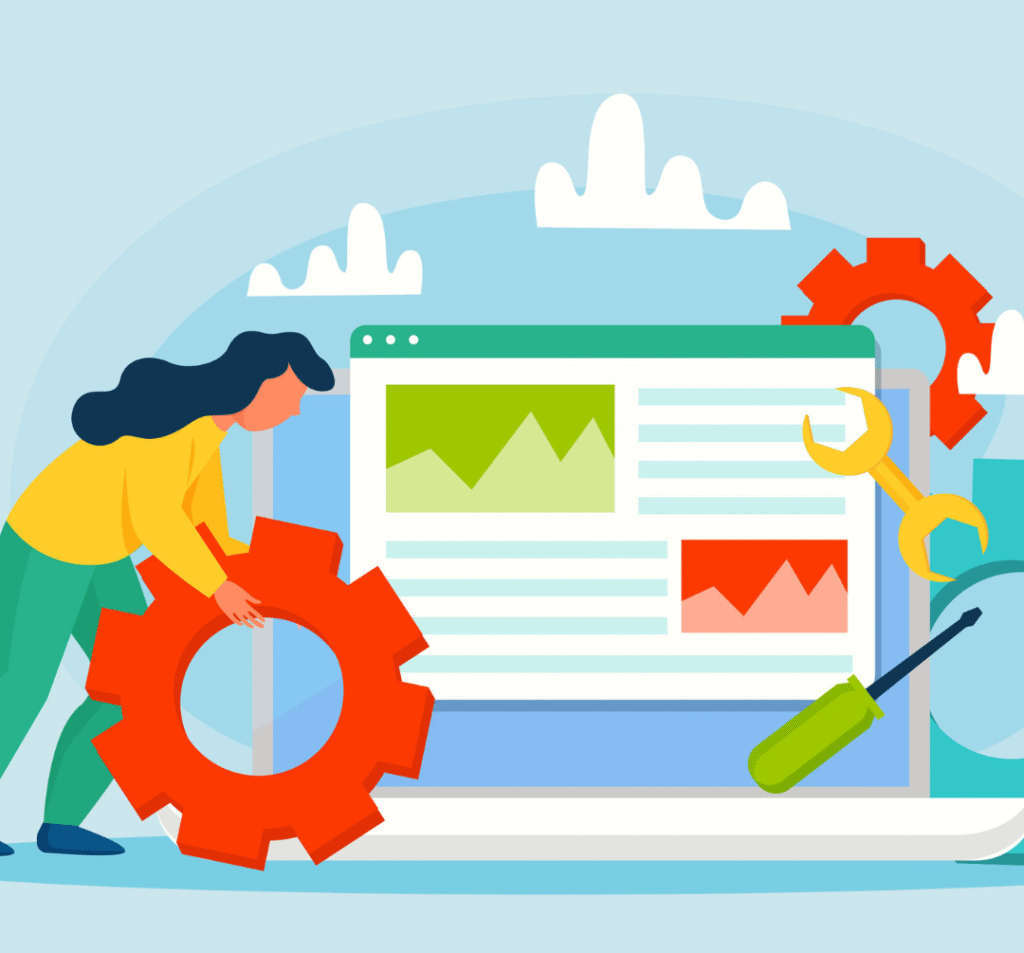
b. Automation (e.g., Zapier, Integromat):
These tools save time by automating repetitive tasks—like moving info from one app to another or sending reminders.
- Communication (e.g., Slack, Microsoft Teams)
- These keep your team connected and messages in one place, so you don’t have to rely on endless email threads.
c. Metrics & Dashboards (e.g., Zoho Analytics, Power BI):
- These tools let you see what’s working and what’s not—by tracking key numbers and performance in real time.
There are many other tools Sme’s can use that suits to your business which help you work smarter, not harder, and support steady, organized growth.
7. BENEFITS OF THE APPROACH:
- Taking this balanced approach gives several key benefits for small and growing businesses:
- Sustainable Growth Sme’s can grow at a steady pace without breaking things.
- Less Operational Stress-Systems run more smoothly, and the team isn’t constantly putting out fires.

- Better Team Morale: Clear roles and good processes make the team feel more focused and confident.
- Competitive Advantage: Most businesses don’t get this balance right—if you do, you stand out.
- Customer Trust & Loyalty: When things work well, customers notice—and they stick with you.
In short, this approach helps you grow in a way that’s smart, stable, and built to last.
CASE STUDIES:
1. WOW! MOMO
(i). External Growth (Customer Side):
- Created fun products like Momo Burgers
- Opened more stores across India (600+ outlets)
- Built a strong brand with smart marketing
- Launched new brands: Wow! China and Wow! Chicken
(ii). Internal Growth (Backend/Operations):
- Built central kitchens to keep food quality high.
- Trained their own team instead of franchising.
- Used tech tools to manage supply and delivery.
- Partnered with Café Coffee Day during COVID to save space and cost
🔁 They Listened and Improved:
- Took customer feedback to improve taste and service. Used data to decide where and how to grow next.
✅ Results:
- Valued at over ₹2,400 crore
- Strong brand, smooth operations, and loyal customers
- A great example of growing smart and sustainably
2. PAPER BOAT (HECTOR BEVERAGES):
Paper Boat started in 2013. Started Selling traditional Indian drinks like Aam Panna and Jaljeera. They are Known for nostalgic branding and unique packaging
(i) External Growth – What Customers See
- Emotional Branding: “Drinks and Memories”
- Creative Packaging: Stand-out pouches
- Marketing: Storytelling ads and social media
- Product Expansion: More Indian flavors over time
- Wider Reach: Sold through stores, e-commerce, and partners

(ii) Internal Improvements – Behind the Scenes
- Built a modern factory to scale up safely and efficiently
- Sourced quality ingredients from trusted farms
- Automated systems to keep quality high
- Partnered with distributors to reach more places
- Used tools and data to run operations smoothly
🔄 Feedback in Action:
- Collected feedback from customers and reviews. Improved flavors, packaging, and service based on real input.
- Showed customers they were listening.
✅ Results:
- Steady growth year after year.
- Reliable operations to support demand
- Happy customers who keep coming back
- Strong team and brand with a clear focus
Takeaway:
Paper Boat and Wow Momo grew smart by working on marketing and operations together, what makes the Parallel Progress Principle so powerful for SMEs.
CONCLUSION:
The Parallel Progress Principle offers a smarter path to grow externally while strengthening internally.
By balancing marketing, sales, and expansion with continuous operational improvements, SMEs can:
- Scale without breaking systems
- Stay agile and aligned with customer needs
- Build resilient teams and lasting brands
Don’t wait to fix operations later—grow and improve together, right from the start.